Starting a dumpster rental company can be an excellent business opportunity, but one of the most important decisions you will make is choosing the right dumpsters for your initial fleet.
Buying too many containers before you understand your market can tie up capital unnecessarily. Buying too few—or purchasing the wrong sizes—can make it difficult to serve customers and grow.
Whether you are launching your first dumpster rental company or adding roll-off service to an existing waste, hauling, construction, or recycling business, planning your container fleet carefully can help you start with the right equipment and make better use of your investment.
At Hambicki Products, we manufacture commercial dumpsters and roll-off containers for waste and recycling companies throughout the United States. This guide covers some of the most important things to consider when purchasing dumpsters for a new rental business.
Start by Understanding the Customers You Plan to Serve
Before deciding which dumpsters to purchase, think about the types of customers you expect to serve.
Different markets create demand for different container sizes.
A dumpster rental company focused primarily on residential cleanouts and remodeling projects may need a different fleet than a company serving large construction sites, commercial contractors, industrial facilities, or demolition companies.
Common dumpster rental customers include:
- Homeowners
- General contractors
- Roofing contractors
- Remodeling companies
- Property managers
- Restoration companies
- Commercial businesses
- Construction companies
- Demolition contractors
- Landscapers
- Real estate investors
- Municipal and industrial customers
Understanding your primary customer base will help you determine which dumpster sizes are most likely to stay rented instead of sitting in your yard.
Choose the Right Roll-Off Dumpster Sizes
One of the first questions new dumpster rental companies ask is:
What dumpster sizes should I buy first?
There is no single answer for every company, but a diversified starting fleet usually gives you more flexibility.
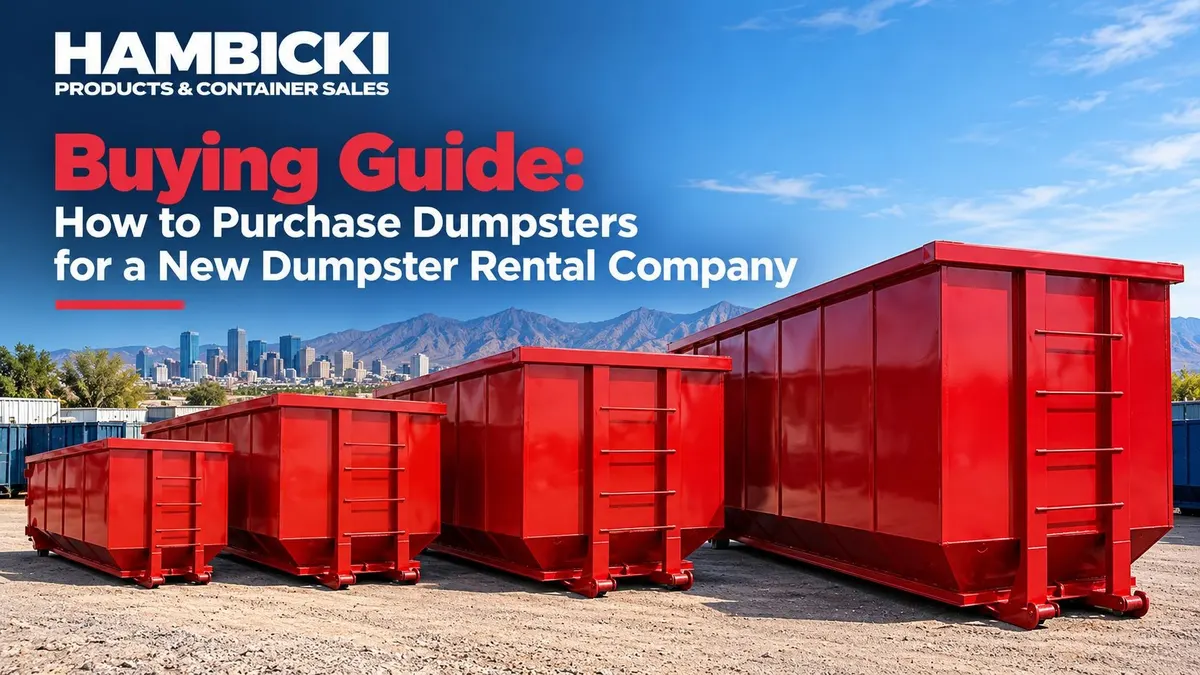
Common roll-off dumpster sizes include:
10- to 15-Yard Dumpsters
Smaller roll-off dumpsters are useful for projects where space is limited or where customers do not generate enough material to justify a large container.
They can be a good option for:
- Small home cleanouts
- Bathroom remodeling
- Landscaping projects
- Small roofing jobs
- Concrete or heavy material applications
- Tight residential locations
A smaller container can also provide an entry-level rental option for customers who are price sensitive.
20-Yard Dumpsters
The 20-yard dumpster is one of the most versatile sizes for many rental companies.
It works well for:
- Home renovations
- Roofing projects
- Property cleanouts
- Flooring removal
- Small construction projects
- Residential remodeling
For a new dumpster rental operation, 20-yard containers can often become an important part of the fleet because they can serve both residential customers and contractors.
30-Yard Dumpsters
A 30-yard roll-off provides additional capacity without moving all the way to the largest container size.
Typical uses include:
- Major remodeling projects
- Estate cleanouts
- Commercial renovations
- Construction debris
- Larger roofing jobs
- Property restoration
If contractors will be an important part of your customer base, 30-yard dumpsters can provide valuable flexibility.
40-Yard Dumpsters
The 40-yard roll-off is commonly used for large-volume projects such as:
- New construction
- Commercial demolition
- Large cleanouts
- Industrial projects
- Major renovation projects
- Bulky construction debris
These containers can be highly productive when you have customers who need the capacity, but a new company should consider local demand before purchasing too many large units.
Consider a Mixed Fleet Instead of Buying One Size
One common mistake when starting a dumpster rental company is purchasing too many containers of a single size.
A mixed fleet gives your sales team the ability to offer customers the right container for each project.
For example, an initial fleet might include a combination of:
- Smaller roll-off dumpsters
- 20-yard dumpsters
- 30-yard dumpsters
- 40-yard dumpsters
The correct mix depends on your market, hauling equipment, available capital, disposal facilities, and customer base.
As your company begins receiving quote requests, track which sizes customers request most frequently. That information can help guide your next container purchase instead of relying only on estimates.
Match Your Dumpsters to Your Roll-Off Truck
Your dumpsters and your hauling equipment need to work together.
Before placing a large container order, confirm the specifications of your roll-off truck or hook-lift system.
Important considerations may include:
- Rail configuration
- Container length
- Hook or cable system
- Maximum container dimensions
- Truck capacity
- Hoist configuration
- Local weight restrictions
A container manufacturer should understand how the dumpster will be transported and help ensure that the container specifications are appropriate for your equipment.
This is particularly important when purchasing equipment for a new operation.
Think About the Materials Your Customers Will Dispose Of
Not every dumpster should necessarily be built for exactly the same application.
The type of material placed inside the container affects wear, weight, and the overall demands placed on the dumpster.
Customers may dispose of materials such as:
- Household debris
- Construction waste
- Roofing materials
- Wood
- Drywall
- Landscaping debris
- Metal
- Concrete
- Dirt
- Demolition material
If you expect containers to regularly handle heavy or abrasive materials, discuss those applications with your dumpster manufacturer.
Choosing the appropriate construction specifications at the beginning can help you purchase equipment better suited to the work your company performs.
Dumpster Quality Matters
Price is important when launching a new business, but the lowest initial purchase price is not always the lowest long-term cost.
Rental dumpsters are revenue-producing equipment. They are loaded, transported, emptied, dropped, moved, and exposed to harsh conditions repeatedly.
When comparing dumpsters for sale, consider factors such as:
- Steel construction
- Floor design
- Sidewall construction
- Reinforcement
- Weld quality
- Door construction
- Hinges and latches
- Rollers
- Structural durability
- Paint and finishing
- Overall workmanship
A well-built container may remain in service for many years.
The longer a dumpster remains productive and rentable, the greater the opportunity to generate a return on the original investment.
Consider Dumpster Color and Branding
Appearance is another consideration that new rental companies sometimes overlook.
Your dumpsters may be visible at homes, commercial properties, construction sites, and along busy streets throughout your service area.
That makes every container a potential advertisement for your company.
Choosing a consistent paint color and adding professional branding can help create a recognizable fleet.
Consider adding:
- Company logo
- Website address
- Phone number
- Dumpster number
- Safety information
- Required warning labels
A clean, consistent fleet can help a newer company appear established and professional.
Determine How Many Dumpsters You Need to Start
Another common question is:
How many dumpsters should a new rental company buy?
The answer depends on your available capital and operating model.
Remember that a rental container can generate revenue only when it is available to customers.
If every dumpster is rented and another customer calls, you may have to turn away the business.
On the other hand, purchasing a very large fleet before demand exists can place unnecessary pressure on cash flow.
Consider:
- Your startup budget
- Number of trucks
- Expected rental volume
- Typical rental duration
- Local population
- Number of competitors
- Construction activity
- Disposal facility availability
- Geographic service area
Many growing companies add containers gradually as utilization increases.
The important thing is to track demand.
If customers repeatedly request 20-yard dumpsters and you frequently run out of them, that is a strong indication of what your next equipment purchase should include.
Research Your Local Dumpster Rental Market
Before buying your first fleet, study the market where you intend to operate.
Search for existing dumpster rental companies and review:
- Dumpster sizes they offer
- Rental periods
- Service areas
- Customer reviews
- Types of customers they target
- Pricing structure
- Same-day or next-day availability
- Specialty services
You are not simply looking for competitors.
You are looking for gaps in the market.
Perhaps contractors have difficulty getting 30-yard containers quickly.
Maybe residential customers need smaller dumpsters that fit more easily in driveways.
Perhaps surrounding cities are underserved.
Those opportunities can influence the dumpsters you purchase and the areas you market to.
Plan for Growth From the Beginning
Your first dumpster purchase is only the beginning.
As your company grows, your own rental data should become one of your best purchasing tools.
Track:
- Number of quote requests
- Dumpster sizes requested
- Quantity requested
- Rental location
- Customer type
- City
- ZIP code
- Lead source
- Rentals won
- Rentals lost
- Containers that are frequently unavailable
Over time, these numbers can reveal exactly where your business should invest.
For example, you may discover that 20-yard dumpsters generate the greatest volume of requests while 30-yard dumpsters generate your highest-value contractor accounts.
You may also discover that a nearby city is generating a surprising amount of demand, creating an opportunity for additional advertising.
Successful fleet expansion should increasingly be based on real customer demand rather than guesswork.
Don't Forget Front-Load Dumpsters
Depending on your business model, you may eventually decide to expand beyond temporary roll-off rentals.
Front-load dumpsters can allow waste companies to serve recurring commercial customers such as:
- Restaurants
- Retail centers
- Offices
- Apartment communities
- Warehouses
- Industrial facilities
- Schools
- Commercial properties
Common front-load dumpster sizes include 2-, 3-, 4-, 6-, and 8-yard configurations, depending on the manufacturer and application.
Recurring commercial waste service can complement temporary roll-off rentals and create another source of revenue.
Work With a Dumpster Manufacturer That Understands Your Business
When you're building a new dumpster rental company, your container manufacturer should be more than simply a place to purchase steel boxes.
An experienced manufacturer can help you evaluate:
- Dumpster sizes
- Container specifications
- Truck compatibility
- Construction options
- Door configurations
- Paint colors
- Fleet requirements
- Future expansion
The goal is to purchase containers that support your business today while giving you room to grow.
Building Your First Dumpster Fleet?
Hambicki Products manufactures durable roll-off dumpsters, front-load dumpsters, and waste containers for rental companies, waste haulers, contractors, municipalities, and commercial operations throughout the United States.
Whether you're purchasing your first containers or expanding an established fleet, our team can help you determine the dumpster sizes, quantities, and configurations that fit your operation.
Request a quote from Hambicki Products today and let us help you build the right dumpster fleet for your business.
- Buying Guides
- Roll-Off Dumpsters